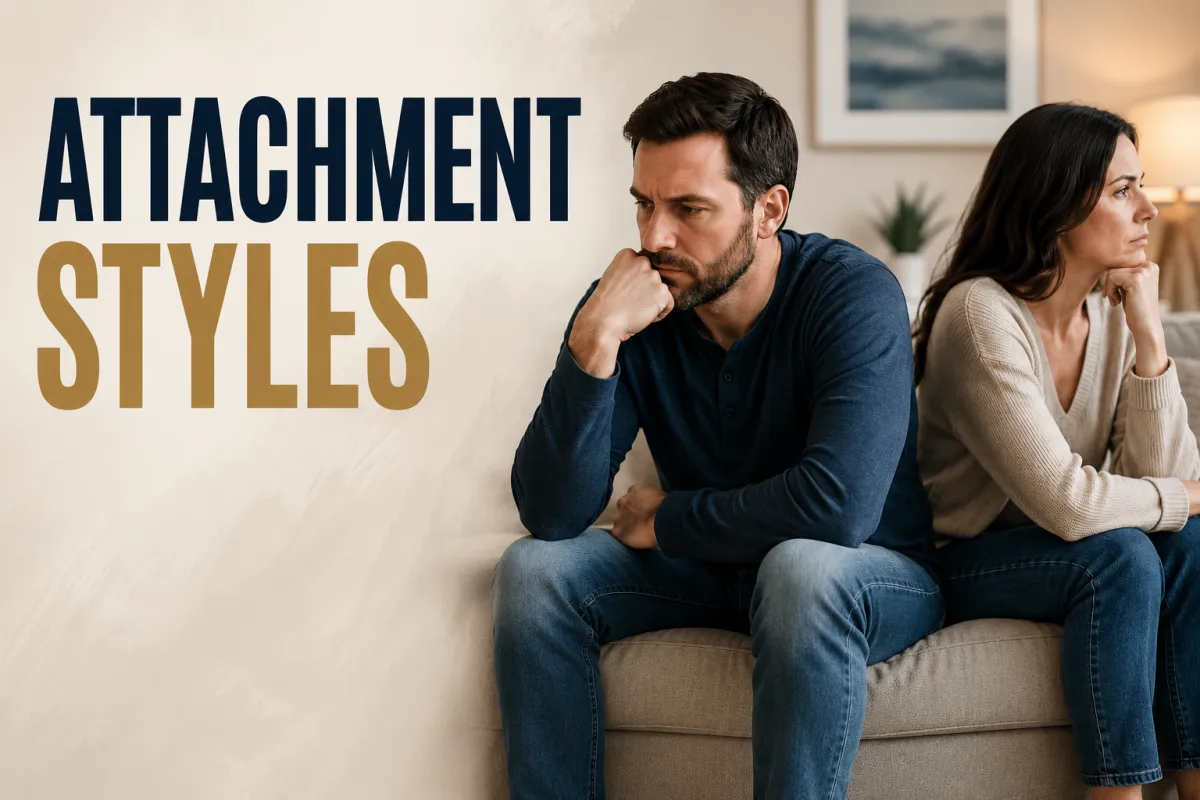
Attachment Styles in Relationships; Why One Partner Chases While the Other Pulls Away
Attachment Styles in Relationships:
Why One Partner Chases While the Other Pulls Away
Have you ever wondered why your wife wants to talk through conflict immediately while your first instinct is to shut down, walk away, or say, "I just need some time to think"?
If that sounds familiar, you're not alone.
As a relationship coach who has worked with hundreds of couples over the past two decades, I've seen this pattern over and over again—especially with good men who deeply love their wives but struggle to know what to do when emotions run high. Many assume something is wrong with them because they don't know what to say. In reality, they're often reacting from deeply rooted attachment patterns that were formed long before they met their partner.
What Are Attachment Styles?
Attachment styles describe how we learned to experience love, safety, trust, and connection during childhood. Those early experiences quietly shape how we communicate, handle conflict, express emotions, and respond to intimacy as adults.
While every relationship is unique, psychologists generally identify four attachment styles:
Secure Attachment: Feels comfortable expressing emotions, trusting others, and balancing independence with closeness.
Anxious Attachment: Fears rejection or abandonment, seeks frequent reassurance, and may overthink a partner's words or actions.
Avoidant Attachment: Values independence, feels overwhelmed by emotional intensity, and often withdraws during conflict to regain a sense of control.
Disorganized Attachment: A combination of anxious and avoidant tendencies, often linked to inconsistent caregiving, trauma, or unpredictable childhood experiences.
Understanding your attachment style isn't about labeling yourself; it's about understanding the story behind your reactions so you can respond differently.
Why So Many Men Pull Away During Conflict
One of the most common dynamics I see is a husband who genuinely wants a healthy marriage but shuts down when conflict becomes emotionally intense. It's rarely because he doesn't care.
More often, his nervous system is overwhelmed. He may have grown up believing that emotions should be hidden, that vulnerability is weakness, or that the safest thing to do is avoid conflict altogether.
Meanwhile, his wife may experience that silence as rejection or emotional abandonment.
The result often looks like this:
She reaches for connection and reassurance.
He pulls back to calm himself or avoid making things worse.
She feels unheard or unimportant.
He feels criticized, overwhelmed, or like he can never get it right.
Both partners end up feeling disconnected, even though neither wants that outcome.
I've watched countless couples spend years arguing about dishes, finances, parenting, or intimacy when the real issue wasn't the topic itself. The deeper issue was that each person's nervous system had learned a different way to respond to emotional stress.
Can Attachment Styles Change?
Absolutely. The encouraging news is that attachment styles are not permanent. With greater self-awareness, emotional regulation, intentional communication, and emotional safety, couples can develop what's known as a secure attachment regardless of where they started.
This is a significant part of the work I do with couples and with men who want to become stronger emotional leaders at home. Together, we uncover the patterns underneath the conflict, heal old emotional wounds, and develop practical tools that help both partners feel safe, understood, respected, and connected again.
When you understand why you're reacting the way you are, blame gives way to curiosity. Curiosity leads to understanding. And understanding creates the foundation for lasting change.
Key Takeaways
If there's one thing I hope you remember, it's this:
Your attachment style is not your identity.
Shutting down doesn't mean you don't love your partner.
Your reactions make sense when you understand your story.
Emotional leadership begins with self-awareness.
Secure, connected marriages are built through practice—not perfection.
Attachment styles explain how we protect ourselves, but healing goes one step further. To truly rebuild trust and create lasting intimacy, we also need to let go of old hurts that keep us emotionally stuck.
In the next article, we'll explore why forgiveness isn't about excusing what happened it's about creating the understanding and compassion in order to have the freedom to heal, reconnect, and build a stronger, more connected marriage.