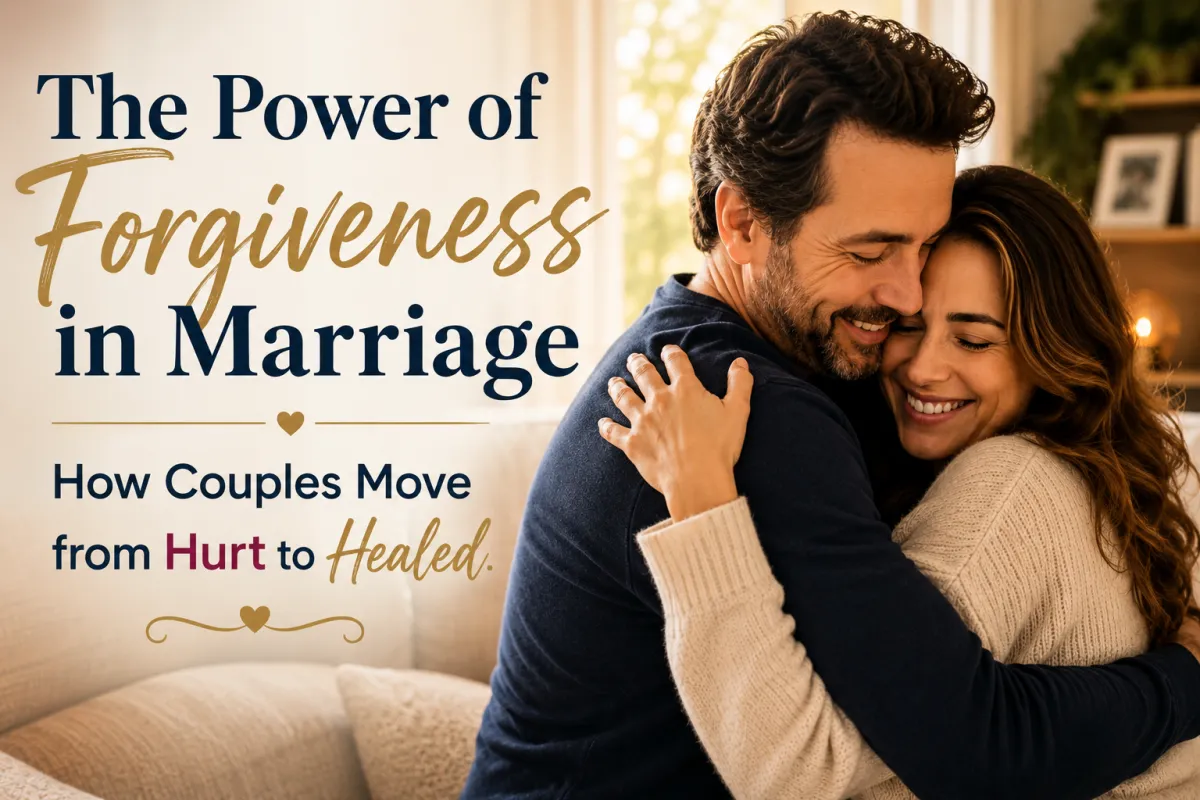
The Power of Forgiveness in Marriage: How Couples Move From Hurt to Healing
The Power of Forgiveness in Marriage:
How Couples Move From Hurt to Healed
Every long-term marriage will experience moments of hurt. A broken promise. A harsh word spoken in anger. Emotional distance. Betrayal. Years of unresolved conflict. It's not a question of if you'll be hurt in a relationship; it's a question of how you'll respond when it happens.
Left unresolved, emotional pain doesn't simply disappear. It often turns into resentment, and resentment quietly builds walls between two people who once felt deeply connected. Over time, couples stop feeling like partners and begin living more like roommates, carrying old hurts into every new conversation.
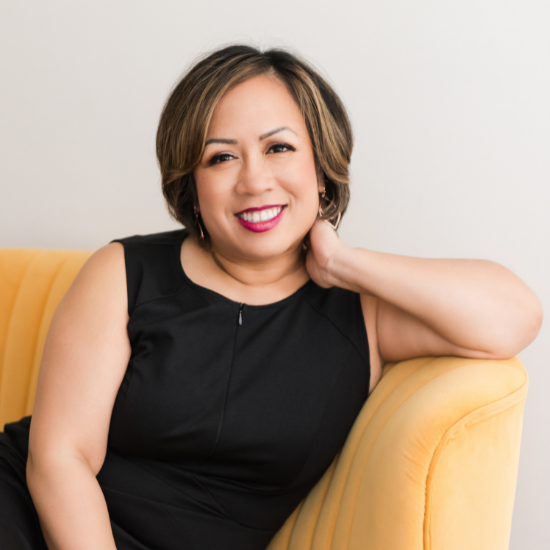
As a relationship coach who has spent more than 20 years helping hundreds of individuals and couples rebuild trust, heal emotional wounds, and reconnect, I've learned that forgiveness is one of the greatest predictors of whether a marriage survives and thrives. Yet it's also one of the most misunderstood concepts I teach.
Why Most People Get Forgiveness Wrong
When I ask clients what forgiveness means, I often hear responses like, "If I forgive them, I'm saying what they did was okay," or, "If I forgive them, they'll just hurt me again." Others believe forgiveness means forgetting, pretending nothing happened, or immediately trusting the other person again.
If you've ever believed any of those things, you're not alone. Most of us were never taught what forgiveness actually is. Instead, we were given a definition that made forgiveness feel unfair, unsafe, or even impossible.
The truth is, forgiveness has very little to do with excusing another person's behaviour. It has everything to do with setting yourself free.
What Forgiveness Really Means
Forgiveness is not approval. It is not forgetting. It is not pretending the pain didn't matter. It is not removing healthy boundaries or allowing someone to continue hurting you.
Forgiveness is choosing to release the emotional grip the past has on your present so it no longer controls your future. It is deciding that while you cannot change what happened, you can choose what happens next.
Forgiveness sounds like this:
I acknowledge that I was hurt.
I choose not to let this pain define my life.
I refuse to carry resentment any longer.
I choose peace instead of bitterness.
Notice something important: none of those statements require the other person to apologize, change, or even agree with your perspective. Forgiveness is a decision you make because you deserve peace.
Forgiveness Is Not the Same as Trust
One of the biggest breakthroughs my clients experience is realizing that forgiveness and trust are two completely different things.
Forgiveness is a choice you make for your own healing. Trust, on the other hand, is rebuilt through consistent honesty, accountability, transparency, changed behaviour, and time.
You can forgive someone while still having healthy boundaries. You can forgive someone and decide the relationship needs significant repair before trust can grow again. In some situations, you can even forgive someone without reconciling the relationship.
Understanding this distinction frees many people from believing they have to choose between protecting themselves and forgiving.
Why Resentment Keeps You Stuck
Many people believe holding onto resentment protects them from being hurt again. In reality, resentment often becomes the very thing that keeps them trapped.
It causes us to replay painful conversations, assume the worst about our partner, and interpret today's disagreements through yesterday's wounds. Eventually, resentment becomes exhausting because we're carrying emotional weight that was never meant to be carried forever.
I've worked with clients who held resentment toward a parent, former spouse, sibling, or partner for decades. Although the relationship had changed—or even ended—the emotional pain continued influencing every new relationship because the wound had never truly healed.
One of the most powerful realizations I've witnessed is this: the greatest prison isn't always the relationship. Sometimes it's the story we've continued telling ourselves about it.
My Journey With Forgiveness
Forgiveness isn't something I teach because I studied it. I teach it because I had to live it.
When I was nine years old, my dad had an affair. Overnight, the world I thought was safe no longer felt safe. Like many children, I didn't have the emotional maturity to understand what was happening, so I made it mean something about me. I carried fears of abandonment, betrayal, rejection, and not being enough into adulthood without even realizing it.
Those fears quietly influenced my relationships for years. I became defensive at times. I made assumptions. I reacted to old emotional wounds instead of responding to what was actually happening in front of me. My reactions made perfect sense when I finally understood the story I had been carrying since childhood.
One of the hardest things I've ever done was forgive my dad. He has since passed away, but I eventually realized forgiveness wasn't about changing him; it was about freeing me. I also had to forgive that frightened nine-year-old little girl who spent years believing she wasn't enough and that love wasn't safe.
Years later, life presented me with another opportunity to practice what I now teach.
As a Catholic who deeply believed in marriage, family, commitment, integrity, and lifelong love, walking through my own divorce was heartbreaking. I felt ashamed. I judged myself harshly. I believed I had failed not only as a wife, but as a person. I had to learn to forgive myself for what I didn't know at the time, for the mistakes I made, and for believing that one painful chapter defined the rest of my story.
Looking back, I can honestly say forgiveness changed my life. It gave me peace. It allowed me to stop living in the past and start creating the extraordinary marriage I enjoy today. More importantly, it gave me the compassion, empathy, and understanding to help hundreds of individuals and couples discover that healing is possible for them too.
The Ultimate Goal Is Peace
One of my favourite questions to ask clients is:
"What do you want more; to be right, or to be at peace?"
That question changes everything.
Our ego wants justice. It wants validation. It wants to keep score. While those desires are understandable, they rarely create healing. Peace comes when we stop allowing yesterday's pain to dictate today's relationships.
Forgiveness doesn't erase the past. It changes your relationship with the past. Instead of reliving the hurt every day, you begin carrying wisdom instead of resentment.
The Greatest Person You May Need to Forgive Is Yourself
Sometimes the person who needs your forgiveness most isn't your spouse.
It's you.
Maybe you regret the words you spoke. The years you stayed. The affair. The divorce. The mistakes you made. The opportunities you missed. Whatever your story, shame has a way of convincing us that our worst moment defines who we are.
It doesn't.
Self-forgiveness doesn't remove responsibility. It allows responsibility to become a teacher instead of a life sentence. When you extend yourself the same grace you're learning to extend to others, healing becomes possible.
Forgiveness Makes Love Possible Again
Healthy marriages aren't built by perfect people. They're built by imperfect people who are willing to apologize sincerely, extend grace generously, take responsibility for their actions, and forgive often.
When couples embrace forgiveness, something remarkable happens. They stop seeing each other as enemies and begin seeing each other as two human beings carrying different stories, fears, wounds, and ways of protecting themselves. Compassion replaces blame. Curiosity replaces criticism. Understanding replaces judgment.
That's where emotional safety begins. That's where trust starts to grow. That's where intimacy becomes possible again.
Key Takeaways
If there's one message I hope stays with you, it's this:
Forgiveness is not approval.
Forgiveness is not forgetting.
Forgiveness is not the same as trust.
Forgiveness does not remove healthy boundaries.
Forgiveness is choosing peace over resentment.
Healing begins when you stop asking, "Why did this happen to me?" and start asking, "What can this experience teach me?"
No matter what you've experienced, your story isn't over.
I've seen marriages recover from betrayal, years of emotional distance, and painful misunderstandings. I've also seen individuals find peace after decades of carrying resentment they never thought they could release.
Forgiveness may be one of the hardest choices you'll ever make. It may also become one of the most life-changing. When you release the weight you've been carrying, you create space for healing, deeper connection, and a marriage and a life built not on perfection, but on grace, understanding, and love.
Reflection Question:
Is there someone—including yourself—that you've been waiting to forgive? What might become possible if you chose peace over resentment today?