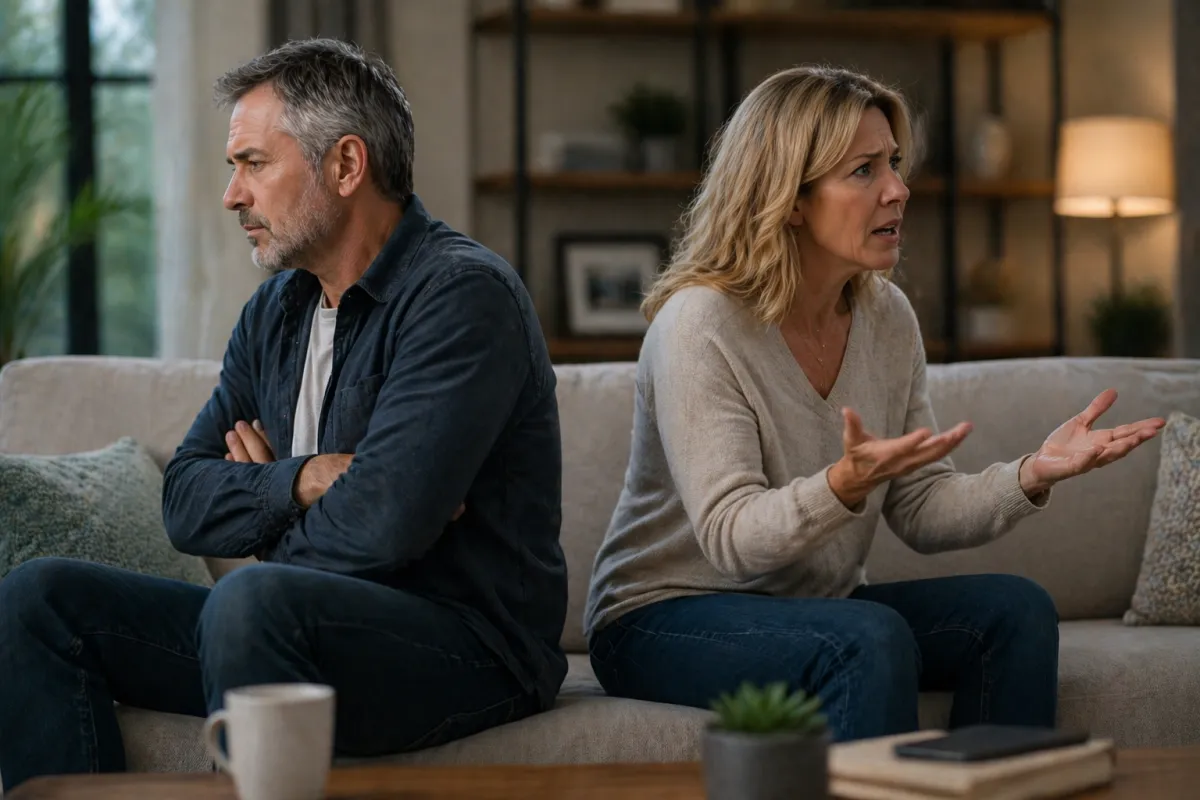
Why Couples Keep Having the Same Arguments: Understanding Ego in Marriage
Why Couples Keep Having the Same Arguments: Understanding Ego in Marriage
Every marriage begins with hope, excitement, and a genuine desire to build something meaningful together. There is passion, laughter, and a sense that the two of you are on the same team, moving in the same direction. In those early stages, connection feels natural and easy, and most couples truly believe that what they have will last. But over time, something shifts.
I’ve sat with hundreds of couples who didn’t expect to feel this way. People who love each other, who chose each other, and who genuinely want it to work… yet find themselves stuck in the same painful patterns. Life gets busy, stress builds, and the conversations that once felt effortless start to feel heavy. Small disagreements turn into familiar arguments; the kind that repeat themselves over and over again, no matter how many times you try to resolve them.
At some point, the questions start to creep in: What happened to us? Why do we keep having the same fight? Why does my partner feel so far away? These aren’t dramatic questions—they’re honest ones. And they usually come from people who are trying, but don’t understand why nothing seems to change.
The Problem Isn’t What You Think
Most couples assume their problems come down to communication, money, or intimacy. And yes, those things matter. But after over two decades in personal growth work and years of working closely with couples, I can tell you that those are rarely the root of the issue.
What I see over and over again is something much deeper, much quieter, and much more powerful.
The ego.
And not in the way most people think.
The ego isn’t about arrogance or pride. It’s the part of you that is trying to protect you. It’s the part that steps in the moment something feels uncomfortable, vulnerable, or emotionally unsafe. It reacts quickly, often before you’ve even had a chance to think.
I see this all the time in my sessions. Someone says something simple, it lands the wrong way, and within seconds the entire energy shifts. Not because either person is trying to hurt the other—but because both people are trying to protect themselves.
Why Arguments Escalate So Quickly
When your partner criticizes you, raises their voice, or says something that stings, your ego doesn’t slow things down—it speeds them up. It interprets that moment as a threat and moves you into defense mode almost instantly.
That’s why arguments escalate so quickly.
What starts as a conversation turns into interruption, shutdown, or a need to prove a point. I’ve seen couples go from calm to completely disconnected in under a minute—not because the issue was that serious, but because of how quickly their reactions took over.
The ego’s priority is protection, not connection.
And this is where couples get stuck. Instead of responding with awareness, they react from habit. They talk over each other, withdraw, or try to win. And in doing so, they unknowingly create more of the very distance they’re trying to fix.
I’ve worked with so many clients who come in exhausted from this cycle. Not because they don’t care—but because they don’t know how to get out of it.
How Ego Creates Emotional Distance
Over time, these moments add up.
When both people are operating from ego, the relationship can start to feel like a constant tension—like you’re always bracing for the next disagreement. Each person wants to feel heard and understood, but the way they’re trying to get there ends up pushing the other further away.
What I often point out to my clients is this: most couples aren’t fighting because they don’t love each other—they’re fighting because they don’t feel safe with each other in those moments.
So they protect.
They put up walls. They guard their emotions. They become more careful, more reactive, or more distant.
And those walls don’t go up overnight. They build slowly, through repeated experiences where connection was missed and protection took over. The problem is, those same walls that keep you from getting hurt… also keep you from feeling close.
The Shift That Changes Everything
This is where things start to change—but only when someone is willing to see it differently.
The work isn’t about fixing your partner. It’s about becoming aware of yourself.
When you can catch your reaction in real time, you create space. And in that space, you have a choice. Instead of asking, “Why are they like this?” you begin to ask, “What just got triggered in me?”
This is a shift I guide my clients through all the time, and it’s not always easy—but it’s powerful.
Because the moment you take ownership of your reaction, everything changes. The tone softens. The defensiveness drops. The conversation moves in a completely different direction.
This is what emotional leadership actually looks like in a relationship. It’s not about being perfect. It’s about being aware, taking responsibility, and choosing connection even when it feels uncomfortable.
And the truth is, most people were never taught how to do this.
There’s a Deeper Layer Most People Miss
At the same time, the ego is only one part of the story.
Beneath it are deeper emotional patterns—ones that were formed long before your current relationship even existed. These patterns come from your early experiences, the environment you grew up in, and the ways you learned to cope, protect, and make sense of the world.
I see this constantly in my work. People reacting to their partner, but what’s really being triggered has nothing to do with the present moment. It’s old. It’s familiar. And it’s running quietly in the background.
In the next article, we’re going to explore that layer more deeply.
Because if you truly want to understand your relationship—and why you respond the way you do—you have to be willing to understand where those patterns began.